About Industrial Control Valve
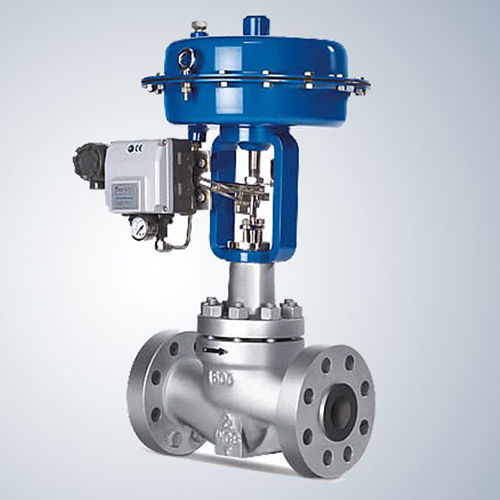
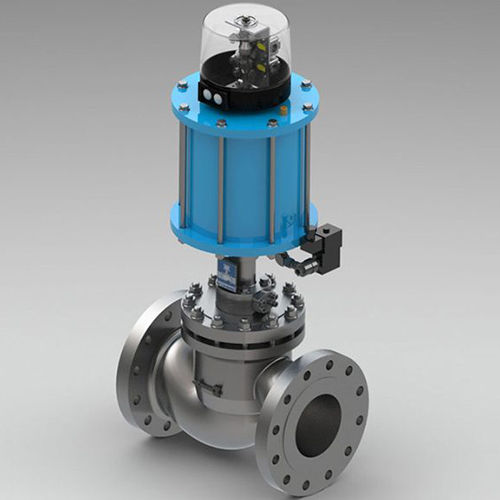
Industrial Control Valve is utilized to regulate the flow, pressure, level, or temperature of a fluid in an industrial process. This valve is designed to control the flow of fluids or gases in a process system. They can open, close, or modulate the flow rate based on the control signals received from an external controller or automation system. Moreover, this valve can be operated manually or actuated using various mechanisms. Also, this valve provides precise flow control by varying the valve opening to achieve the desired flow rate.
Superior Versatility and PerformanceThe ICV-200 control valve provides adaptable operation through its automatic or manual modes, suiting various process requirements. Its corrosion-resistant coating and robust stainless steel body enable long-term reliability in harsh industrial settings. With options for soft or metal seats and bonnet variations, the valve delivers enhanced service life and precise control.
Engineered for Demanding ApplicationsThis globe-type valve accommodates high flow rates of up to 1200 m3/h and pressure ratings up to PN 25. It is built for shut-off integrity and stringent leakage control (Class IV/V). Comprehensive sealing options-PTFE or graphite packing-minimize emissions, while the IP65 enclosure protects sensitive components, even in challenging environments.
Seamless Integration and MaintenanceThe ICV-200's universal end connection standards (ANSI, DIN, JIS), multiple pipe connection types, and broad voltage compatibility ensure hassle-free installation. The integrated position indicator streamlines system monitoring, and the availability of flanged or screwed connections simplifies future maintenance or upgrades.
FAQ's of Industrial Control Valve:
Q: How does the ICV-200 control valve operate in both automatic and manual modes?
A: The ICV-200 is designed to function in either automatic or manual mode. Automatic operation is enabled using pneumatic or electric actuators that respond to control signals, while manual override is possible for direct mechanical control when needed, offering flexibility for various applications.
Q: What are the benefits of the corrosion-resistant coated body and stainless steel material?
A: The corrosion-resistant coating and stainless steel construction significantly enhance the valve's durability, ensuring reliable performance in aggressive media such as water, oil, gas, or steam. This reduces maintenance needs and extends the valve's service life.
Q: Where can the ICV-200 be installed, and what mounting types are supported?
A: The ICV-200 is suitable for installation in diverse industrial environments across India. It supports both vertical and horizontal mounting, making it adaptable for different piping layouts and space constraints in process plants.
Q: What process media and temperature ranges is this valve suitable for?
A: This control valve is engineered for water, oil, gas, and steam, performing reliably within a temperature range of -20C to 220C, suitable for a wide array of industrial processes.
Q: How is leakage prevented and what is the leakage class of the valve?
A: The ICV-200 employs tight shut-off capabilities with options for PTFE or graphite packing and offers Class IV/V leakage ratings. This ensures minimal process fluid loss and complies with industrial safety requirements.
Q: What end connection standards and pressure ratings does the ICV-200 offer?
A: The valve is available with ANSI, DIN, and JIS end connection standards and supports pressure ratings of PN 10, 16, or 25. This allows compatibility with most piping systems in industrial applications.
Q: What advantages does having a position indicator provide for users?
A: The integrated position indicator gives a clear visual reference of the valve's status, enabling operators to quickly verify if the valve is open or closed, thus improving operational safety and process efficiency.

 Send Inquiry




 Send Inquiry


 Send Inquiry
 English
 Spanish
 French
 German
 Italian
 Chinese (Simplified)
 Japanese
 Korean
 Arabic
 Portuguese